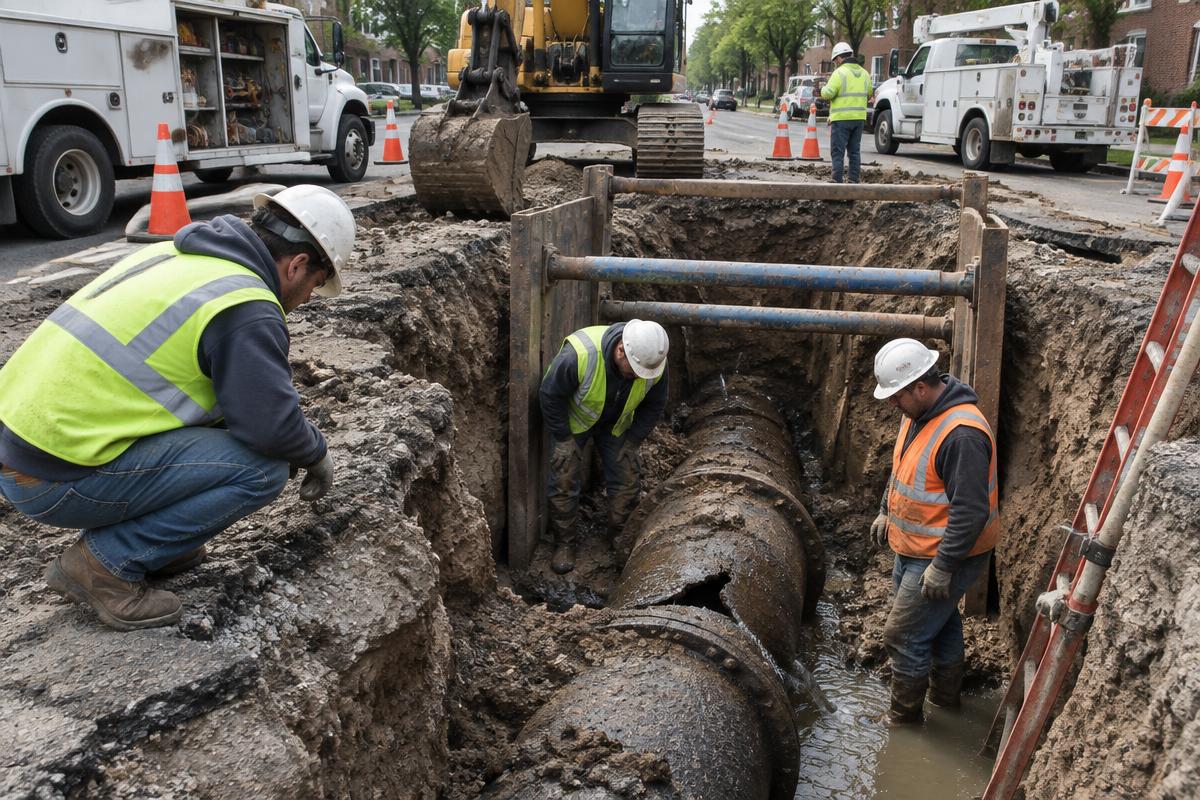
The Main That Breaks Next
03 · PREDICT — Condition assessment and the defensible replacement list. Age is useful context, but age alone is not enough to prioritize replacement. Material, break history, soil, pressure, critical customers and consequence of failure can change the risk picture substantially. Utilities need a repeatable way to combine incomplete records, condition evidence and operational knowledge into capital priorities that engineering, finance and elected leadership can defend. What we will examine: pipe age and material, break history, soil and environmental factors, pressure and transients, critical customers, likelihood and consequence of failure, condition assessment, risk scoring, capital improvement planning. Each webinar is followed by a Post-Event Intelligence Report that captures the key findings, evidence, practical guidance, audience questions and speaker information from the session — a permanent reference designed to support decisions after the live discussion ends.
Key Takeaways
- Understand why age alone is an incomplete predictor of pipe failure.
- Learn how likelihood and consequence of failure can be combined into a practical risk model.
- Understand where condition-assessment technologies provide enough value to justify their cost.
- Learn how condition and risk data can be translated into defensible capital-project priorities.
Why Attend?
Replacement lists are challenged constantly — by finance, by council and by the next unexpected break. This session builds a risk model that holds up to all three.
Who Should Attend
- Utility and public works leaders
- Engineering and capital-planning teams
- Asset managers and GIS staff
- Finance, maintenance and operations leaders
Agenda
- 0:00 Why age alone is not enough to prioritize replacement
- 0:15 Likelihood: material, breaks, soil, pressure and environmental factors
- 0:35 Consequence: critical customers, service disruption and system effects
- 0:50 Condition assessment and failure prediction: where added evidence changes decisions
- 1:10 Turning risk scores into defensible capital-improvement priorities
- 1:25 Audience Q&A