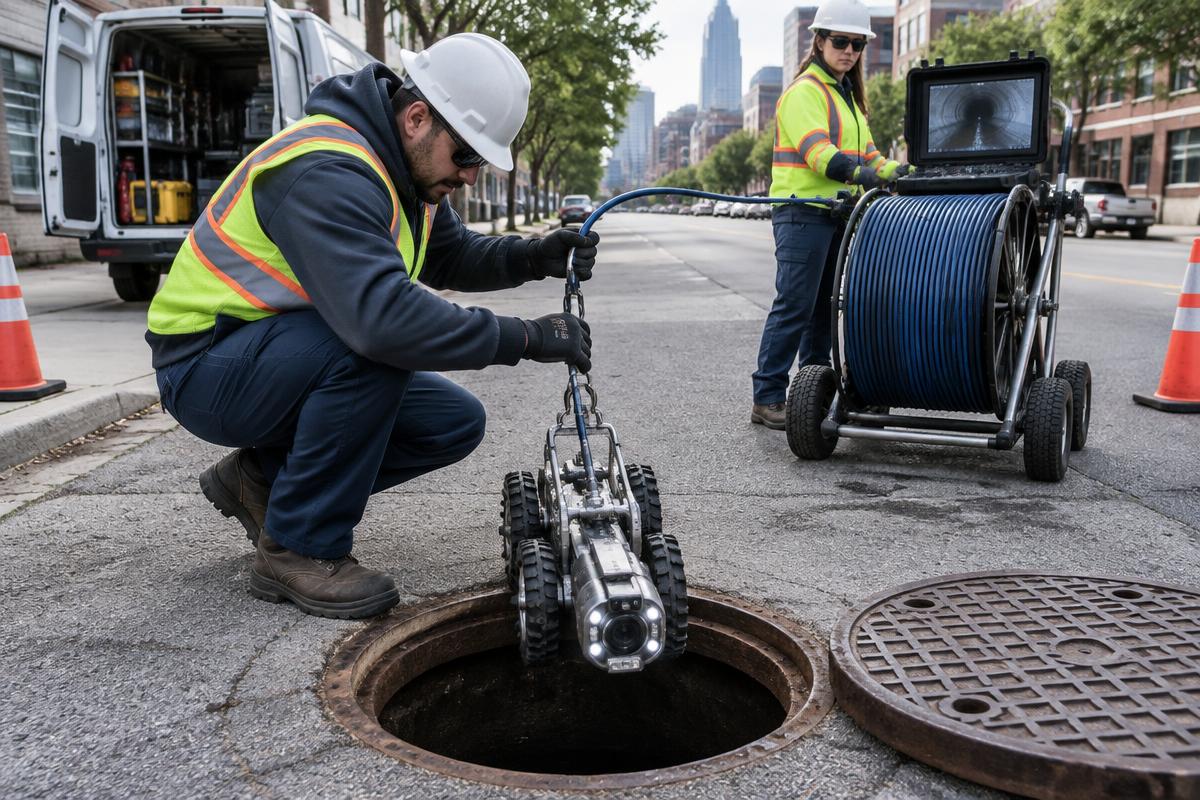
The Sewer System You Cannot See
04 · INSPECT — A practical inspection strategy for collection-system assets. Collection systems deteriorate out of sight, while inflow and infiltration, structural defects and maintenance needs compete for limited crews and capital. CCTV remains essential, but sonar, LiDAR, manhole inspection and AI-assisted review can add useful evidence. The operating challenge is choosing methods deliberately and turning inspection files into consistent decisions. What we will examine: CCTV and PACP, AI-assisted inspection, sonar and LiDAR, manhole inspection, inflow and infiltration, structural condition, maintenance priorities, collection-system asset management. Each webinar is followed by a Post-Event Intelligence Report that captures the key findings, evidence, practical guidance, audience questions and speaker information from the session — a permanent reference designed to support decisions after the live discussion ends.
Key Takeaways
- Understand where CCTV remains the right tool and where complementary inspection methods provide additional value.
- Learn how AI-assisted inspection can improve consistency while still requiring human oversight.
- Understand how inspection data can be turned into condition scores and maintenance priorities.
- Learn how utilities can build a repeatable inspection strategy instead of relying on reactive investigation.
Why Attend?
Inspection files pile up without changing decisions. This session focuses on making collection-system inspection repeatable and connected to maintenance and capital priorities.
Who Should Attend
- Wastewater and collection-system leaders
- Sewer inspection and maintenance teams
- Engineers and asset managers
- GIS, data and capital-planning staff
Agenda
- 0:00 Building a repeatable collection-system inspection strategy
- 0:15 CCTV, PACP and manhole inspection: strengths and limits
- 0:35 Sonar, LiDAR and complementary methods for difficult conditions
- 0:50 AI-assisted review, consistency and the continuing role of human judgment
- 1:10 I&I, structural condition and translating evidence into maintenance priorities
- 1:25 Audience Q&A